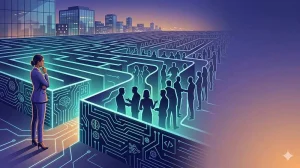
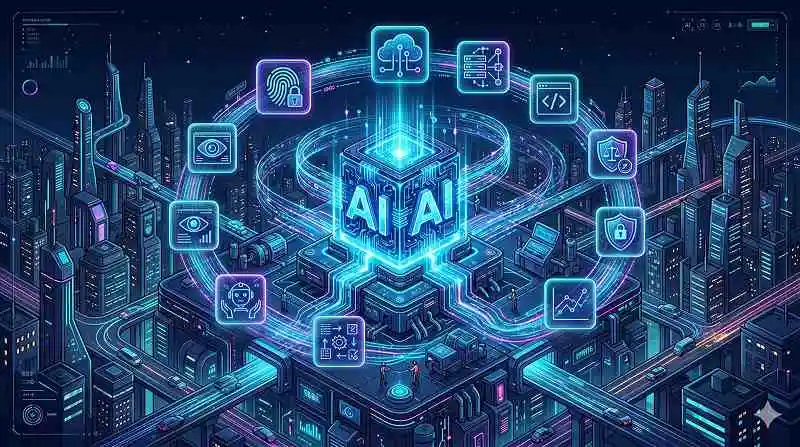
“Togtechify” is my shorthand for turning shiny tech trends into boring, repeatable execution that actually moves KPIs. When people talk about major trends in technology togtechify, what they really want is a way to connect AI headlines to workflows, platforms, and governance that don’t fall apart in production.
Learn more about: ai-driven Reduced Workweek
TL;DR — The 10 execution shifts you actually need
- Togtechify = mapping trends to concrete changes in daily work, tech stack, and risk controls.
- 2026 is the pivot from “AI pilots” to “AI as the default engine” for software, ops, and customer journeys.
- The 3 big themes: Architect (foundations), Synthesist (intelligence in the flow), Vanguard (trust and safety).
- Your playbook: start with 2–3 critical workflows, standardize AI platforms, and hard-wire governance from day one.
- The organizations that win treat AI like infrastructure, not a side project or a chatbot experiment.
What Does “Togtechify” Actually Mean in 2026?
Defining Togtechify in One Line
Togtechify = the discipline of turning tech trends into measurable execution across workflows, platforms, and governance. In practice, it’s the difference between reading a Gartner report and actually changing how your sales team sells or how your claims team closes cases. Based on experience, the companies that move fastest are the ones that force every AI conversation through three questions: what changes in the work, what changes in the stack, and what changes in the guardrails. If leadership can’t answer all three, you don’t have a strategy—you have a slide deck.
Togtechify always starts with workflows: how tickets move, how campaigns launch, how incidents get resolved. Then it hits platforms: which models, data pipelines, and integration patterns become standard instead of one-off experiments. Finally, it locks in governance: access, monitoring, audit trails, and clear ownership so you don’t scale chaos. According to most mature AI programs I’ve seen, skipping any one of these three creates bottlenecks, shadow IT, or both.
The Three Themes Behind the Togtechify Shift
Most of the major trends in technology togtechify fall into three execution themes. The Architect focuses on building foundations that won’t crumble under real usage: data, platforms, and infrastructure. The Synthesist injects intelligence directly into workflows so humans and machines actually co-operate instead of fighting each other. The Vanguard defends trust, ensuring you can scale AI without blowing up compliance, security, or brand reputation. Let’s walk through the 10 trends inside these themes—without the hype and with concrete moves you can make this quarter.
How Does Theme 1: The Architect Turn AI Into a Reliable Engine?
1) AI-Native Development Platforms (Software Shipping Gets a New Gear)
AI-native dev platforms embed code generation, test creation, and environment setup into the development lifecycle itself. In real teams, this looks like Git-based workflows where every pull request gets AI-assisted reviews, tests, and security checks before a human even looks at it. Research from multiple vendors now shows 20–40% faster delivery for teams that adopt these tools and change their processes, not just their IDE. The key is to treat AI as a co-developer with guardrails, not a magic intern.
What to do now (Togtechify move):
- Pick 2–3 product squads and standardize one AI dev platform across their entire workflow.
- Make AI-assisted code review and test generation the default, not optional.
- Set a baseline: measure cycle time, defect rate, and deployment frequency before and after.
Why it matters for fintech: Faster, safer releases mean you can respond to regulatory changes or fraud patterns in weeks instead of quarters, without multiplying headcount.
2) Unified Data and Feature Stores (Stop Rebuilding the Same Logic)
Unified data and feature stores centralize the logic that AI models actually use—customer scores, risk signals, product attributes—so teams stop rebuilding the same features in 12 different notebooks. In practice, this creates a single “menu” of vetted features that data scientists, engineers, and analysts can reuse across models and reports. Industry leaders report that this cuts model development time by 30–50% and drastically reduces inconsistent metrics. The big win is consistency: the number you show to the regulator matches the one your model used.
What to do now (Togtechify move):
- Identify 10–20 core features used across your top AI use cases (risk, churn, pricing).
- Stand up a simple feature store (even on top of your data warehouse) and make it the default source.
- Assign ownership: one team is accountable for documentation, quality checks, and access control.
Why it matters for retail: A shared feature store keeps personalization, pricing, and inventory models aligned, so customers see coherent offers instead of random discounts.
3) Hybrid AI Infrastructure (Cloud, On-Prem, and Edge That Actually Talk)
Hybrid AI infrastructure means models can run where they make sense—cloud for heavy training, on-prem for sensitive data, edge for latency-critical decisions—without creating three separate worlds. In real deployments, this looks like shared model registries, consistent deployment tooling, and clear data boundaries. According to cloud providers, most large enterprises are already hybrid whether they like it or not; the mature ones admit it and design for it. The payoff is flexibility: you can move workloads as costs, regulations, or traffic patterns shift.
What to do now (Togtechify move):
- Map where your top 5 AI workloads should run based on latency, cost, and data sensitivity.
- Standardize one model deployment approach (e.g., containers + registry) across environments.
- Create clear policies: which data can leave the data center, which must stay, and who approves exceptions.
Why it matters for healthcare: You can keep patient data local while still using powerful cloud models, reducing regulatory risk while improving diagnostic support.
How Does Theme 2: The Synthesist Put Intelligence Directly in the Workflow?
4) AI-First Process Co-Pilots (Not Just Chatbots, Real Work Partners)
AI-first process co-pilots live inside the tools people already use—CRM, ERP, ticketing—and help execute multi-step tasks, not just answer questions. In practice, that means drafting emails, updating records, triggering workflows, and summarizing context without forcing users to jump between systems. Based on experience, adoption skyrockets when AI is embedded where the work happens instead of in a separate “AI portal.” The goal is to reduce cognitive load and clicks, not to show off language models.
What to do now (Togtechify move):
- Choose 1–2 high-volume workflows (support tickets, sales outreach, claims intake).
- Embed AI into the primary tool (ServiceNow, Salesforce, custom app) with clear, visible actions.
- Track time-to-resolution, handle time, and user satisfaction before and after rollout.
Why it matters for customer support: Agents can handle more complex tickets because the co-pilot handles summarization, classification, and routine responses.
5) Retrieval-Augmented Generation (RAG) as a Standard Pattern
RAG systems combine large language models with your own documents, knowledge bases, and transaction data so answers are grounded in reality. Instead of relying on generic internet training, the model “reads” your policies, contracts, or product docs at query time. Industry practice now treats RAG as a default pattern for enterprise LLM use because it’s easier to control and update than fine-tuning for every change. Done well, this cuts hallucinations and makes legal and compliance teams much less nervous.
What to do now (Togtechify move):
- Start with one corpus: policies, product documentation, or contracts—not everything at once.
- Implement a basic RAG stack (vector store + LLM) and add citation links to every answer.
- Define review rules: which responses can auto-ship, which require human approval.
Why it matters for insurance: Agents can answer coverage questions quickly with cited policy clauses, reducing escalations and legal exposure.
6) Decision Intelligence Layers (AI That Optimizes, Not Just Explains)
Decision intelligence layers sit on top of your existing analytics and operational systems to recommend or automate decisions: pricing, routing, prioritization. In practice, this often means combining rules, ML models, and simulation to propose the next best action, not just show a dashboard. According to experts, organizations that move from descriptive to prescriptive analytics see 5–15% improvements in revenue or cost metrics on targeted processes. The hard part is not the model; it’s aligning incentives and thresholds for automation.
What to do now (Togtechify move):
- Identify one decision with clear economics (loan approval, discount level, routing priority).
- Build a simple “recommendation first, automation later” layer that logs every suggestion and outcome.
- Set guardrails: confidence thresholds, override rights, and clear accountability for bad decisions.
Why it matters for logistics: Smarter routing and load balancing can cut fuel costs and delays without rewriting your entire TMS.
How Does Theme 3: The Vanguard Keep AI Trustworthy at Scale?
7) AI Governance Frameworks That People Actually Use
AI governance frameworks define how you approve, monitor, and retire AI systems—but they only work if teams adopt them. In mature organizations, governance is a lightweight, repeatable process: standardized risk checklists, model cards, and approval flows integrated into existing change management. Research shows that regulators increasingly expect this level of documentation for high-impact models. The goal is not bureaucracy; it’s to avoid surprises when something fails or gets audited.
What to do now (Togtechify move):
- Create a simple AI project intake form: purpose, data used, impacted users, and risk level.
- Standardize a “model card” template and require it for any model that hits production.
- Tie AI approvals into your existing risk committee or change advisory board, not a new silo.
Why it matters for banking: When regulators ask why a credit model declined a customer, you have a clear, documented answer instead of a scramble.
8) Continuous AI Monitoring (Because Models Drift, Always)
Continuous monitoring tracks model performance, bias, data drift, and operational health over time. In practice, that means dashboards for prediction quality, input distributions, latency, and failure rates, plus alerts when thresholds break. Based on experience, many AI incidents come not from bad models but from unseen changes in upstream data or user behavior. Industry standards now treat monitoring as non-negotiable for any model touching revenue, safety, or compliance.
What to do now (Togtechify move):
- Start with 3–5 core metrics per model: accuracy or proxy, drift, latency, and volume.
- Implement automated alerts when metrics deviate beyond agreed thresholds.
- Schedule regular reviews (monthly or quarterly) to decide retraining, rollback, or recalibration.
Why it matters for e-commerce: If your recommendation model drifts after a seasonal spike, you’ll notice and fix it before conversion rates quietly tank.
9) Privacy-Preserving and Secure AI (Guardrails by Design)
Privacy-preserving AI uses techniques like data minimization, anonymization, and secure enclaves to reduce exposure while still enabling useful models. In real programs, this often means separating PII from behavioral data, restricting prompts and outputs, and logging all access to sensitive content. According to security best practices, AI systems should follow the same zero-trust principles as any other critical service. The mistake to avoid is treating LLMs as “just another API” without considering data leakage paths.
What to do now (Togtechify move):
- Classify which data can never be sent to external or general-purpose models.
- Implement prompt and output filters for sensitive terms, PII, and regulated content.
- Integrate AI endpoints into your existing security stack: SSO, logging, DLP, and anomaly detection.
Why it matters for legal and HR: You can use AI to draft documents and analyze cases without accidentally exposing employee or client secrets to third parties.
Learn more about: Startup Booted Fundraising Strategy
How Do You Start Applying These Major Trends in Technology Togtechify Today?
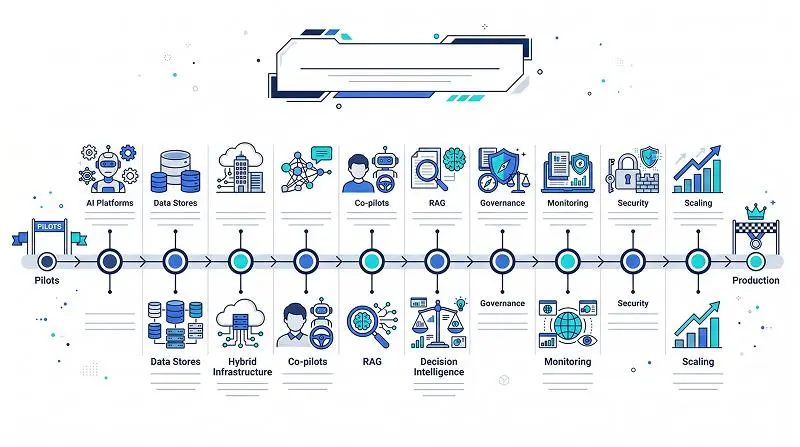
10) The Togtechify Playbook: From Pilots to Production
The practical way to apply these major trends in technology togtechify is to pick a few critical workflows and run them end-to-end through the Architect, Synthesist, and Vanguard lenses. In practice, that means: fix the data and platform basics, embed intelligence where people work, and wire in governance from day one. Based on experience, organizations that try to “AI everything” stall; those that focus on 2–3 high-value journeys build momentum and internal credibility. Momentum matters more than perfection.
What to do now (Togtechify move):
- Choose 2–3 flagship workflows (e.g., lead-to-cash, incident-to-resolution, claim-to-payout).
- For each, explicitly define: workflow changes, platform standards, and governance requirements.
- Set 3–5 KPIs per workflow (time, cost, quality, risk) and review them monthly with leadership.
Why it matters across industries: Whether you’re in telecom, manufacturing, or healthcare, this pattern lets you prove value quickly while building reusable foundations instead of one-off experiments.
Learn more about: AI Transformation is a Problem of Governance
Closing: From Buzzwords to Boring, Repeatable Wins
The real gap today isn’t between you and the latest model; it’s between buzzwords and boring, operational detail. The companies that win the next wave of AI are not the ones with the flashiest demos, but the ones that quietly togtechify their major trends in technology togtechify into workflows, platforms, and governance that people trust. If you can consistently answer three questions—what changes in the work, what changes in the stack, what changes in the risk—every time a new trend appears, you’re ahead of most of the market