
what are the steps of the design process
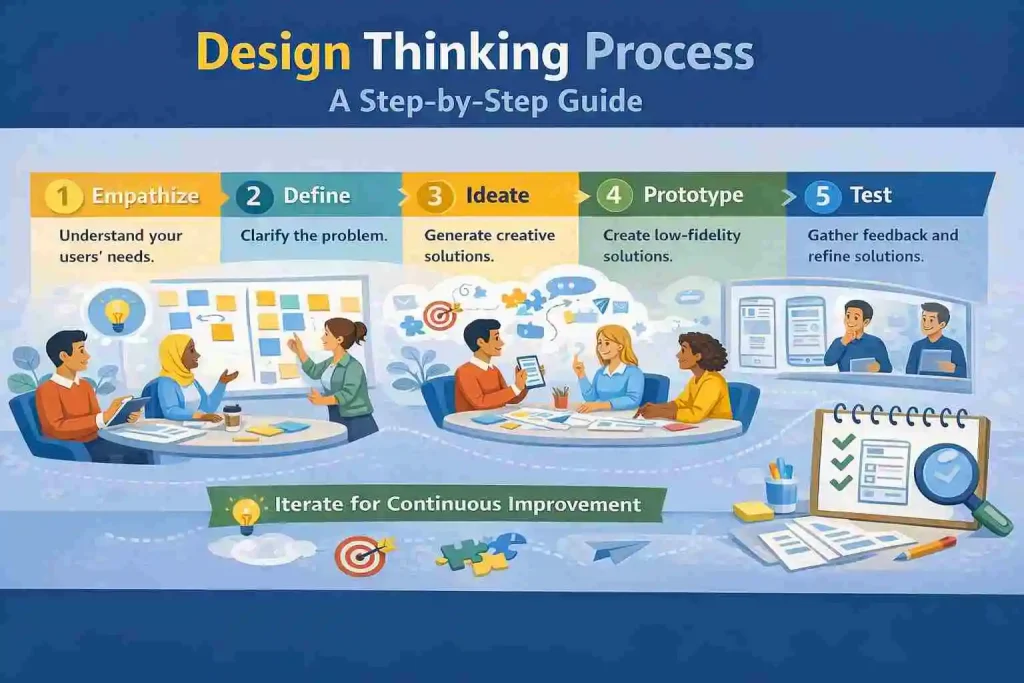
Design Thinking is a human-centered methodology focused on solving problems by understanding the needs and experiences of the people involved. It is a non-linear, iterative process that involves collaboration, creativity, and critical thinking. When applied effectively, Design Thinking empowers individuals and teams to find innovative solutions to problems that often seem unsolvable. But what are the steps of the design process that will guide you through this transformative approach? Let’s break down each stage of the Design Thinking process with a clear, actionable step-by-step guide.
Learn more about: when to use true position in design thinking
What is the Design Thinking Process?
Design Thinking is not just a buzzword or trendy method—it’s a structured approach to problem-solving that prioritizes empathy and user needs. The process encourages designers to move away from traditional problem-solving methods and adopt a flexible, human-centered approach to creating solutions.
At its core, Design Thinking focuses on understanding user needs, defining the right problems, ideating solutions, creating prototypes, and testing those solutions in real-world scenarios. It’s a flexible process that can be adapted to various contexts, from business innovation to product design and even social change.
The Steps in the Design Thinking Process
According to the Hasso Plattner Institute of Design at Stanford (also known as the d.school), the Design Thinking process consists of five main stages: Empathize, Define, Ideate, Prototype, and Test. While these stages are presented sequentially, they are often iterative and may overlap depending on the complexity of the problem.
1. Empathize—Understand Your Users’ Needs
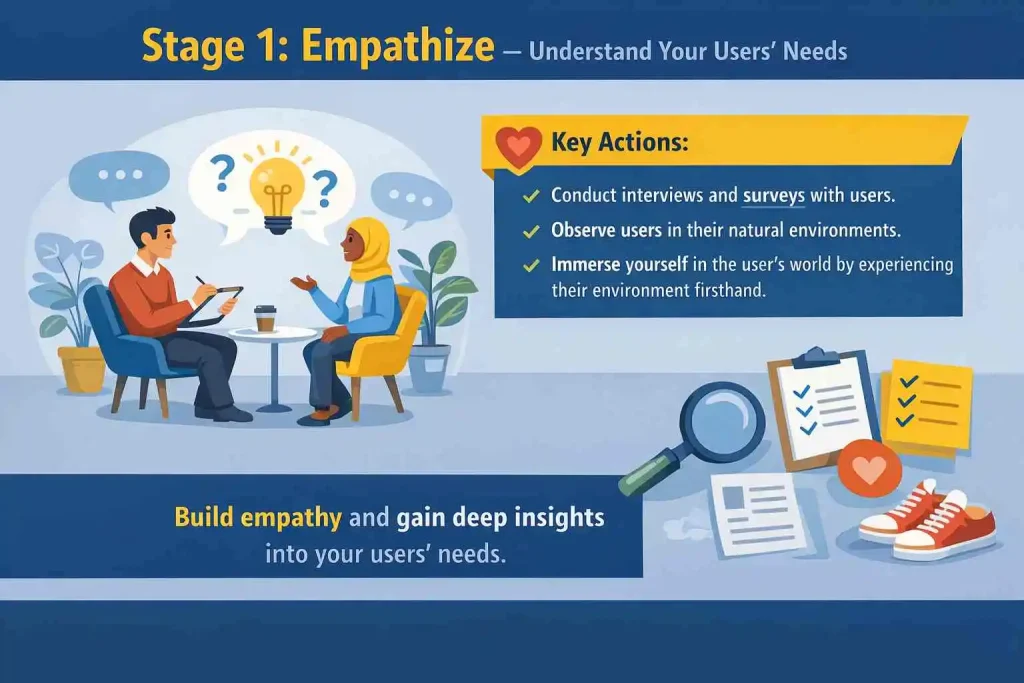
The first stage of Design Thinking is all about gaining an empathic understanding of the users and their needs. In this phase, you step into the shoes of your users, observe their behaviors, listen to their concerns, and engage with them to uncover deep insights. This is a crucial stage because it allows you to gather the context and emotional understanding needed to guide the rest of the process.
Key Actions in the Empathize Stage:
- Conduct interviews and surveys with users.
- Observe users in their natural environments.
- Immerse yourself in the user’s world by experiencing their environment firsthand.
By building empathy, you remove personal biases and assumptions, allowing you to create truly user-centered solutions.
2. Define—Clarify the Problem
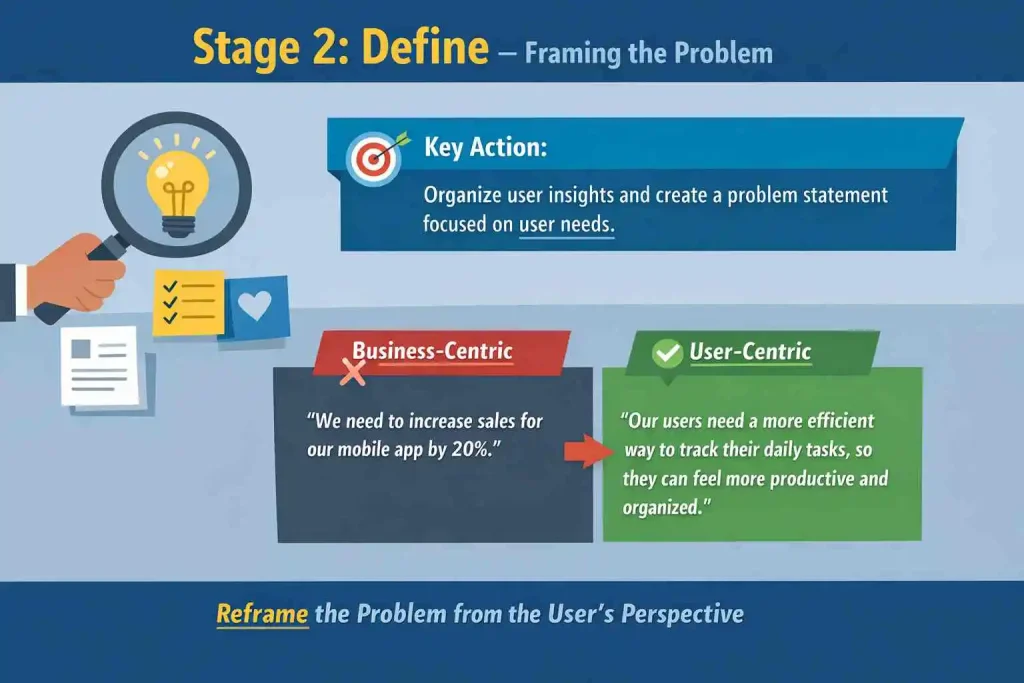
Once you’ve gathered insights from the Empathize stage, the next step is to analyze the information and define the problem clearly. The Define stage involves organizing and synthesizing your findings to craft a clear problem statement that centers on the user’s needs. This helps focus the team’s efforts on solving the right problem rather than jumping to a solution too quickly.
Key Actions in the Define Stage:
- Analyze the information gathered in the Empathize phase.
- Identify key themes, patterns, and pain points.
- Craft a user-centered problem statement.
For example, instead of defining the problem as “Our company needs to increase market share for food products among teenage girls by 5%,” reframe it from the user’s perspective: “Teenage girls need to eat nutritious food in order to thrive, be healthy, and grow.”
3. Ideate—Generate Creative Solutions
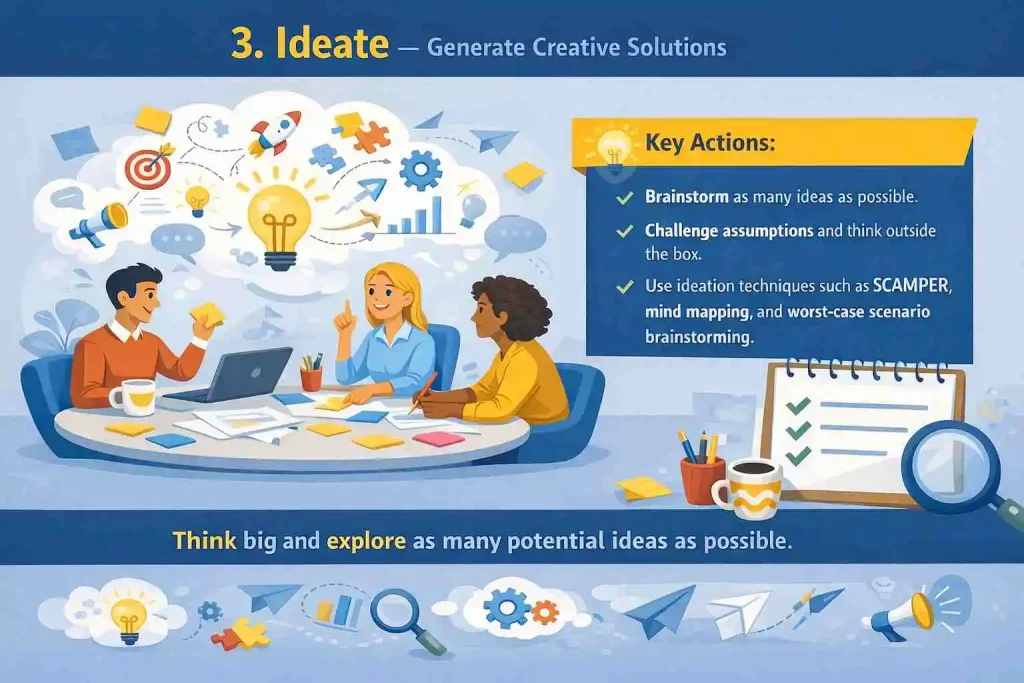
The third stage, Ideate, is where creativity begins to shine. In this phase, the goal is to generate a wide range of ideas to solve the defined problem. It’s essential to encourage creativity and explore as many potential solutions as possible without judgment. Brainstorming sessions, mind mapping, and other ideation techniques are often employed to expand the thinking process.
Key Actions in the Ideate Stage:
- Brainstorm as many ideas as possible.
- Challenge assumptions and think outside the box.
- Use ideation techniques such as SCAMPER, mind mapping, and worst-case scenario brainstorming.
This stage is about thinking broadly and not limiting possibilities. The more ideas you generate, the higher the likelihood of finding an innovative solution that meets user needs.
4. Prototype—Create Low-Fidelity Solutions
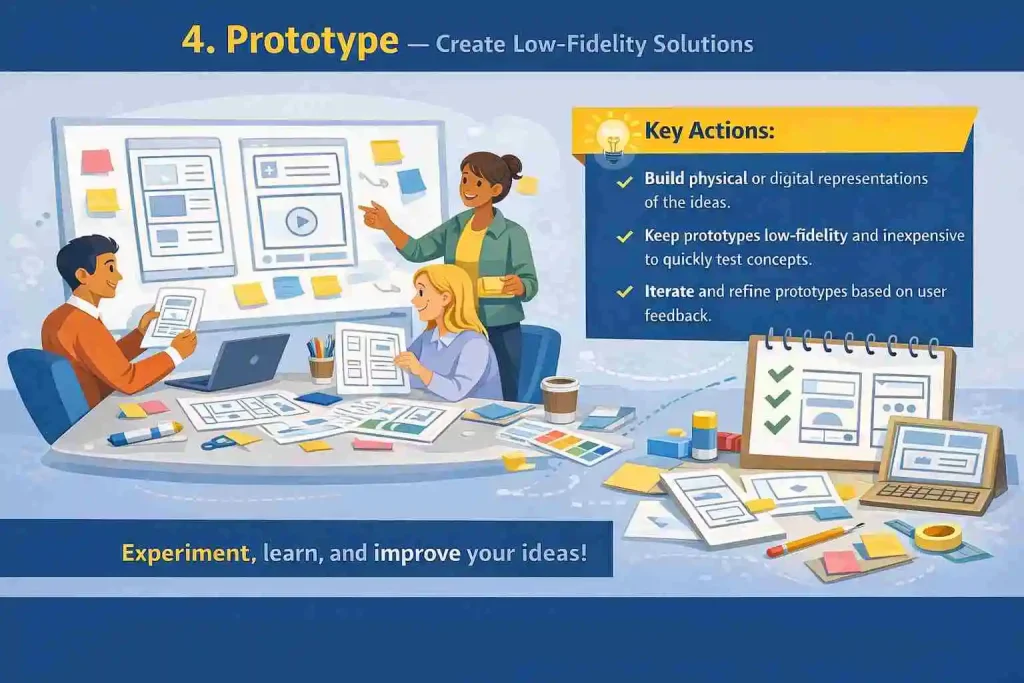
Now that you have a list of potential solutions, it’s time to create prototypes. Prototypes are tangible, often low-cost representations of your ideas that allow you to test and refine your concepts. The goal of this stage is to turn abstract ideas into concrete objects or experiences that can be tested.
Key Actions in the Prototype Stage:
- Build physical or digital representations of the ideas.
- Keep prototypes low-fidelity and inexpensive to quickly test concepts.
- Iterate and refine prototypes based on user feedback.
Prototyping doesn’t mean creating a fully developed final product—it’s about experimenting, learning, and refining ideas. By testing prototypes early, you can identify weaknesses and improve on the design before moving forward.
5. Test—Gather Feedback and Refine Solutions
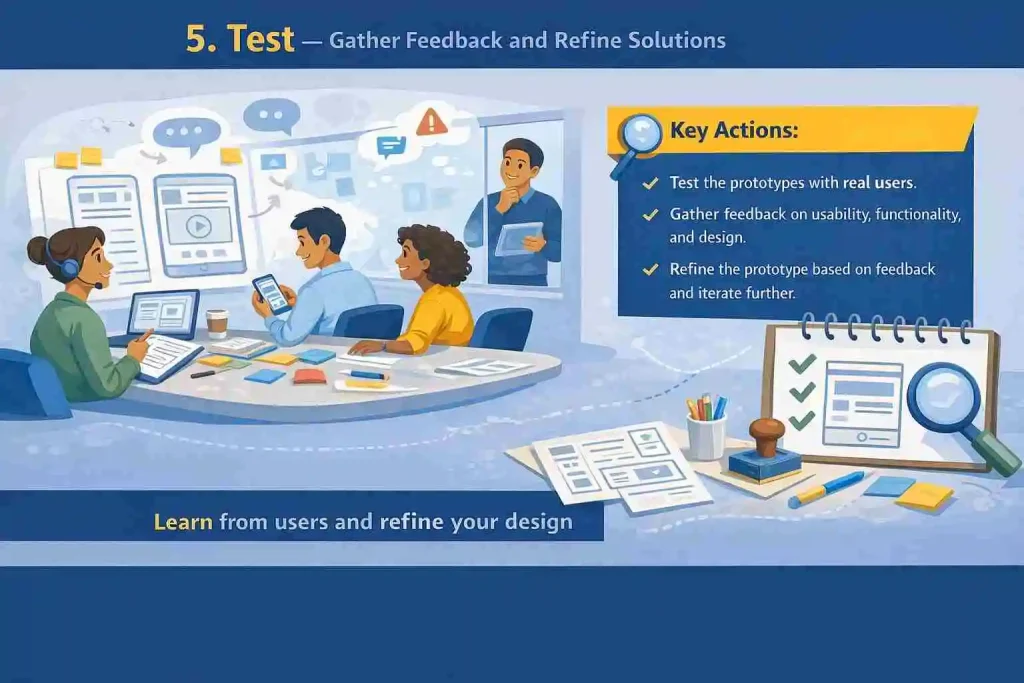
The final stage, Test, involves gathering feedback on the prototypes you’ve created. You conduct real-world testing with users to see how they interact with the solution, identify any issues, and refine the design. This phase allows you to gain deeper insights into how well your solution meets user needs.
Key Actions in the Test Stage:
- Test the prototypes with real users.
- Gather feedback on usability, functionality, and design.
- Refine the prototype based on feedback and iterate further.
Testing is not a one-time event; it’s an ongoing process of feedback and refinement. The results from user testing may reveal new issues, prompting you to revisit earlier stages, such as ideation or redefining the problem.
Learn more about: How to Become a UX Researcher
The Non-Linear Nature of Design Thinking
While these five stages are outlined in a linear fashion, the reality of Design Thinking is much more flexible. The process is often non-linear, meaning designers may move back and forth between stages as they learn more about the problem, users, and potential solutions. Insights from testing may lead you back to the ideation phase or to redefine the problem.
For example, a prototype that fails during testing may inspire new ideas in the ideation phase. Conversely, test results may prompt you to return to the Empathize stage to better understand user behavior.
Key Takeaways from the Design Thinking Process
The Design Thinking process is a dynamic and flexible approach to problem-solving that centers on creating human-centered solutions. By following the five stages—Empathize, Define, Ideate, Prototype, and Test—you can ensure that the solutions you create are driven by real user needs and insights. Keep in mind that the process is iterative, allowing for ongoing improvement and refinement.
- Empathize with users to understand their needs.
- Define the problem based on those insights.
- Ideate to generate creative solutions.
- Prototype low-fidelity solutions to test ideas.
- Test those solutions, gather feedback, and iterate further.
The stages of the process are not fixed—they can be adapted, repeated, and combined to suit the context of your project. Whether you’re designing a new product, service, or system, Design Thinking provides the framework you need to create innovative, user-centered solutions.
By following this Design Thinking Process: A Step-by-Step Guide, you can not only create better solutions but also empower yourself and your team to think creatively, test ideas, and iterate continuously to build products and services that truly meet user needs.