

In today’s fast-paced digital world, businesses must offer more than just functional products. They need to create engaging, seamless, and meaningful experiences for their users. User Experience (UX) design plays a crucial role in achieving this goal. Although the term has become widely recognized, many people still don’t fully understand its importance. In this article, we will explore why User Experience design is important, its impact on customer satisfaction, business growth, and why it should be a top priority for all companies.
Learn more about: What Does a UX Researcher Do
1. What is User Experience Design?
User Experience (UX) design is the process of creating products that provide meaningful, relevant, and enjoyable experiences for users. UX design goes beyond making a product look good—it ensures the product works well and is easy to use. UX design is concerned with all aspects of the user’s interaction with a company’s product or service, from how they interact with a website or mobile app to how they engage with the product or service in the real world.
The Core Principles of UX Design
UX design focuses on the following core principles:
- Usability: Ensuring the product is easy and intuitive to use.
- Accessibility: Making products usable by people with various abilities.
- Value: Ensuring the product provides both user satisfaction and business value.
2. Why is User Experience Design Important?
Understanding why User Experience design is important is essential for businesses aiming to succeed in today’s digital age. Good UX design can impact everything from customer satisfaction to business revenue. Here are several key reasons why UX design is so important:
Enhances Customer Satisfaction
A positive user experience leads to higher customer satisfaction. Products that are easy to use and intuitive help create a positive impression, making customers more likely to return and recommend the product to others. A well-designed user experience reduces frustration and builds loyalty.
Drives Business Growth
Investing in UX design has been shown to result in significant business growth. Studies show that every dollar spent on UX design brings a return of $100 in revenue. Businesses that focus on UX design tend to see higher conversion rates, better customer retention, and increased sales.
Improves Accessibility
Accessibility is a key aspect of UX design. Designing for accessibility ensures that users with disabilities can interact with a product. Products designed with accessibility in mind are more inclusive and can be used by a wider audience, which can boost both customer base and reputation.
Fosters Brand Loyalty
Good UX design creates an emotional connection with users. When customers have a positive experience with a product, they are more likely to become loyal to the brand. Loyalty leads to repeat business, higher customer lifetime value, and better brand advocacy.
Reduces Development Costs
Investing in UX design upfront can save businesses money in the long run. Conducting user research, building prototypes, and testing early on helps identify potential issues before they become costly problems after the product is launched. This approach helps streamline the development process and prevent unnecessary fixes.
Learn more about: Why UX Design Strategy is Important
3. What Does a UX Designer Do?
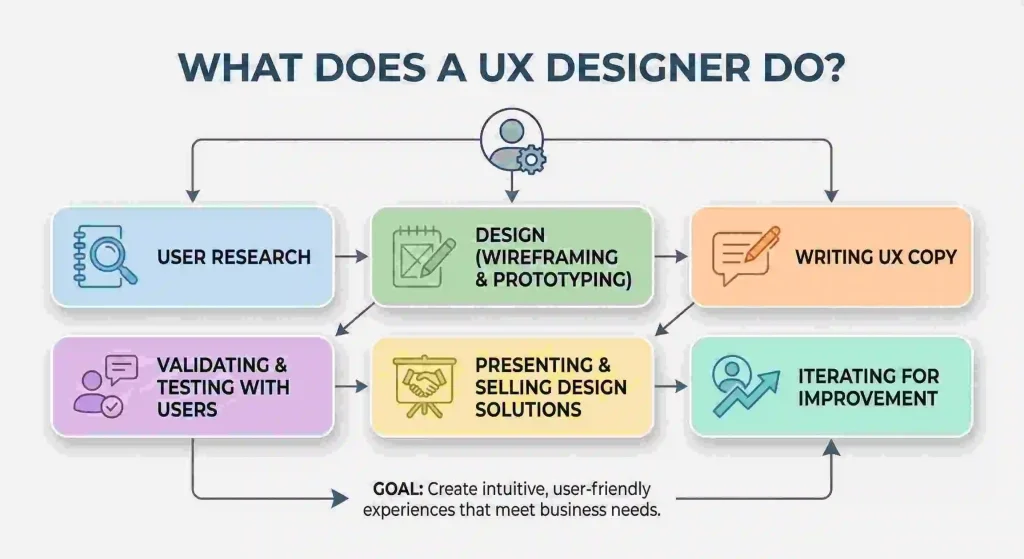
A UX designer’s role involves multiple tasks aimed at creating the best possible user experience. UX designers ensure that a product is not only functional but also user-friendly and efficient. Their job can vary depending on the company and project, but typically, UX designers focus on the following tasks:
User Research
The first step in UX design is understanding the users. UX designers conduct research to gather insights into users’ needs, behaviors, and pain points. This includes surveys, user interviews, and usability tests. Understanding the user is the foundation of creating a product that truly serves their needs.
Design
UX designers create wireframes, prototypes, and mockups that define how the product will function and appear. They ensure that the design solves user problems, enhances usability, and improves the overall experience. UX design focuses on solving real-world problems, not just creating visually pleasing designs.
Writing UX Copy
UX copywriting is a critical aspect of UX design. It involves writing clear and concise text that helps users navigate the product. The copy should guide users through actions like signing up, making a purchase, or navigating the interface. Good UX copy ensures that users always know what to do next.
Validating and Testing with Users
UX designers validate their designs by testing them with real users. This helps identify issues early on and allows designers to make improvements before the product is fully developed. User feedback and testing ensure the design meets user expectations and solves their pain points.
Presenting and Selling Design Solutions
Once the design is ready, UX designers present their solutions to stakeholders within the business. They showcase wireframes, prototypes, and user flows to explain how the design meets both user needs and business goals. Successful presentation and buy-in from stakeholders are crucial for moving the design forward.
4. Principles of UX Design
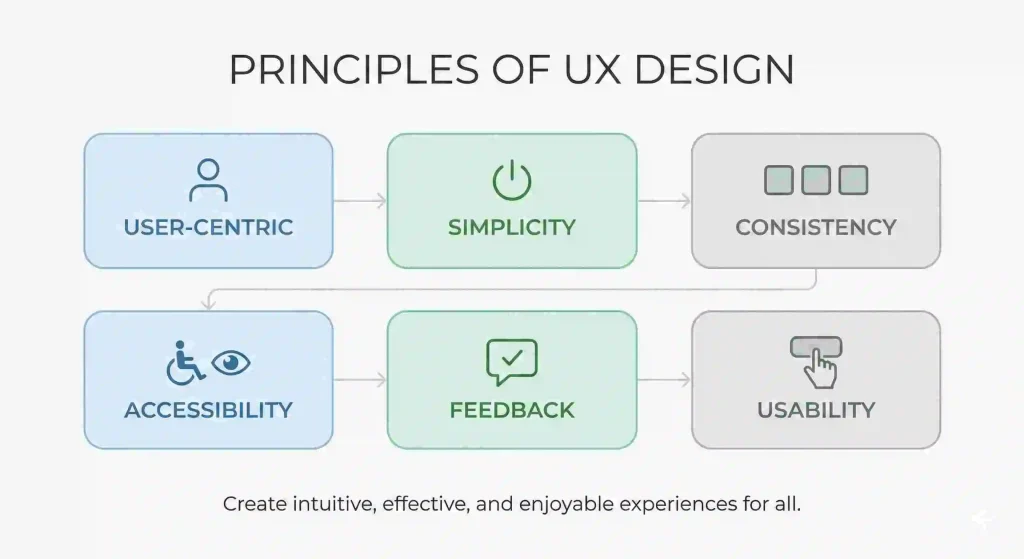
Good UX design is based on several key principles. These principles help ensure that products are not only functional but also provide a satisfying, intuitive, and meaningful experience for users.
Useful
A product must fulfill a real purpose. It needs to address a specific user need and deliver value. If the product doesn’t have a clear purpose, it will struggle to find a user base.
Usable
A usable product is one that is easy to navigate and allows users to complete tasks efficiently. Usability is one of the cornerstones of good UX design, ensuring that the user can achieve their goals without unnecessary frustration.
Findable
Findability refers to how easy it is for users to locate the information or features they need. A product with poor findability leads to frustration, as users may struggle to navigate the interface or locate essential content.
Credible
For users to trust a product, it must deliver what it promises. Credibility is key to ensuring users feel confident in the product. A lack of credibility can cause users to abandon the product in favor of alternatives.
Desirable
The product should appeal to users on an emotional level. A desirable product often has strong branding, a beautiful interface, and an engaging user experience that makes users want to interact with it.
Accessible
Accessibility ensures that users of all abilities can use the product. This includes considering users with disabilities and providing accommodations such as larger text, screen reader compatibility, and voice navigation.
Valuable
A product must provide value to both the user and the business. UX design must balance user needs with business goals to create a product that is both useful and profitable.
Learn more about: How to Become a UX Researcher
5. UX vs Graphic Design vs UI Design
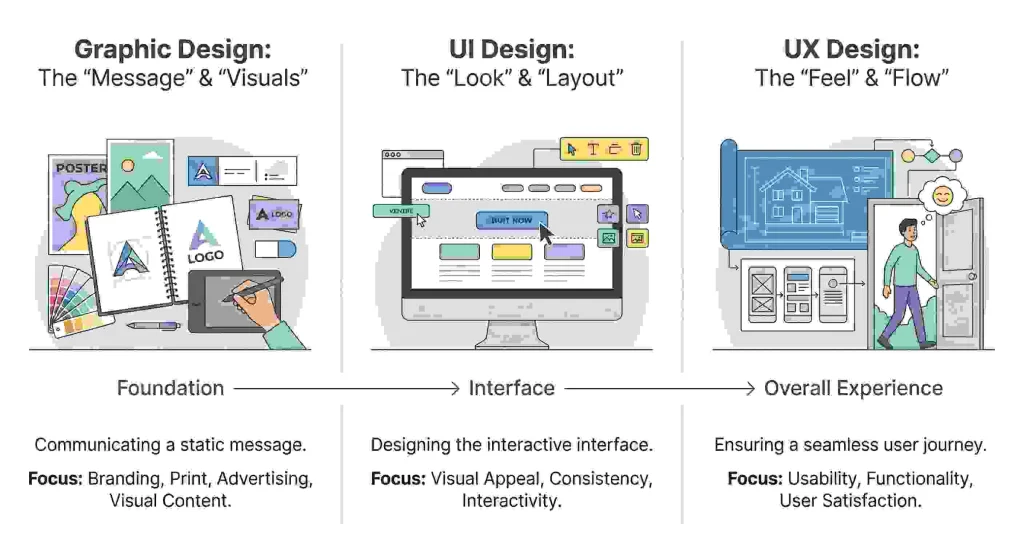
While UX design, graphic design, and UI design are often used interchangeably, they have distinct roles. Here’s how they differ:
The Role of a UX Designer
A UX designer focuses on understanding user needs and creating intuitive, efficient, and enjoyable user experiences. They conduct research, design product flows, and ensure that the product is usable and accessible.
The Role of a Graphic Designer
A graphic designer primarily focuses on the aesthetics of the product. They design visual assets like logos, icons, and branding materials. While graphic design plays an important role in user experience, it is just one element of the overall UX design process.
The Role of a UI Designer
A UI designer focuses on the interactive elements of a product, such as buttons, forms, and menus. They ensure that the product is visually cohesive and easy to navigate, combining aesthetic elements with functional design.
6. Examples of Good and Bad UX
To illustrate the impact of UX design, let’s look at some examples of good and bad UX:
Bad UX Example: Looks Great!…What Does it Do?
A beautiful design can be misleading if the product is difficult to use or confusing. If users can’t figure out how to interact with the product, the design has failed to serve its purpose.
Good UX Example: Duolingo’s Onboarding Process
Duolingo’s onboarding process is a great example of good UX design. It simplifies the registration process and allows users to begin learning immediately, making the experience smooth and engaging.
Good UX Example: Amazon Prime’s 1-Click Tool
Amazon Prime’s 1-Click shopping feature streamlines the purchasing process, allowing users to buy products with a single click. This feature enhances the user experience by saving time and making the shopping process more convenient.
7. How to Start Learning UX Design
If you’re considering a career in UX design, here are some steps to get started:
- Learn the Basics: Familiarize yourself with the key principles of UX design, including user research, wireframing, and prototyping.
- Build a Portfolio: Work on real projects to showcase your design skills. Create case studies that demonstrate your design process and thought process.
- Use Design Tools: Learn popular design tools like Sketch, Figma, and Adobe XD.
- Take Online Courses: Enroll in UX design courses and participate in design communities to improve your skills.
Conclusion
User Experience design is a fundamental aspect of creating successful, user-centered products. By focusing on user needs, businesses can improve customer satisfaction, drive business growth, and build long-lasting brand loyalty. Understanding why User Experience design is important and investing in good UX practices will help ensure that your product not only meets user expectations but exceeds them. Whether you’re a business owner, developer, or designer, prioritizing UX is key to achieving success in today’s competitive market.
Learn more about: how do you start building your information architecture